
A Winter Comfort Dish for Cold Winter
Winter in Nagano is long and deeply cold.
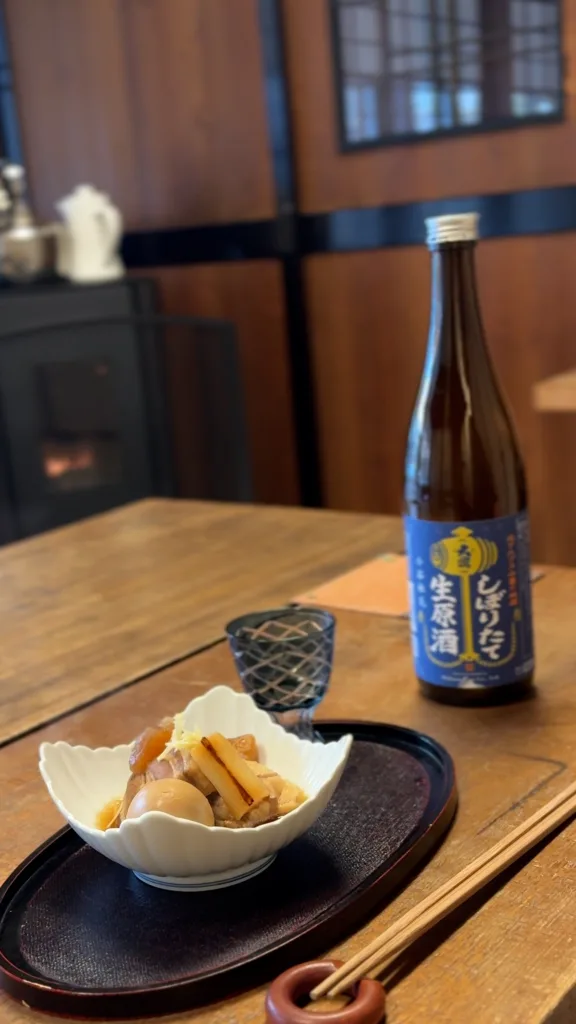
On nights like these, there is nothing more comforting than sitting in a room warmed by a fireplace, enjoying a bowl of something hot alongside a glass of sake. This pork belly braised in soy sauce and dashi is a dish made for exactly that moment.
Pork Belly Braised Until Fork-Tender
In this recipe, pork belly is simmered gently for a full hour until it becomes so tender it can be easily pulled apart with chopsticks.
Slow cooking allows the fat to melt into the meat, creating a rich yet surprisingly clean flavor that is deeply satisfying without being heavy.
Preparing Each Ingredient to Absorb Umami
One of the most important points of this recipe is preparing each ingredient separately.
The daikon radish, boiled eggs, and Japanese leeks are all pre-cooked or grilled before being added to the pot. This extra step allows each ingredient to absorb the pork’s umami and the dashi-based seasoning while maintaining its own texture and balance.
Bold “Genshu” , The Best Sake Paring
For sake pairing, a bold genshu (undiluted sake) is highly recommended.
Genshu typically has a higher alcohol content and delivers a strong first impression in the first sip. This punch pairs exceptionally well with soy sauce–based dishes, especially with the deep dashi flavor and the natural sweetness of pork belly fat. Together, they create a harmonious and satisfying pairing that lingers on the palate.
A Dish to Enjoy Slowly on a Cold Evening
This is not a dish to rush.
“Buta no Kakuni” is best enjoyed slowly, allowing the warmth of the food and sake to sink in — a perfect expression of wintertime comfort.
Japanese Braised Pork Belly (Buta no Kakuni)
Description
Ingredients
For preparing the pork belly
For seasoning and additional ingredients
Instructions
Prepare the pork belly
-
Braise the pork belly to render off excess fat.
Cut the pork belly into pieces about 3 cm thick.
Place the pork in a large pot and add the water and sake, making sure the pork is fully submerged.
Slice the ginger and add it to the pot along with the green parts of the leek.
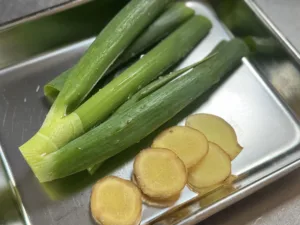
Bring to a boil over medium heat, then reduce to medium-low and simmer for 30 minutes.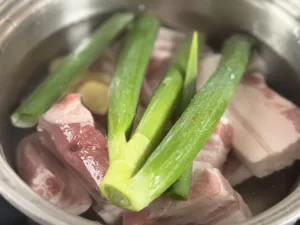
This step removes excess fat and any unwanted odor from the pork.
After 60 minutes, turn off the heat and let the pork sit in the pot for another 30 minutes, until cooled slightly. -
Prepare the vegetables and eggs
Cut the white part of the leek into 3 cm pieces.
Place them in a dry frying pan (no oil) and grill over medium heat until lightly charred on both sides. Remove and set aside.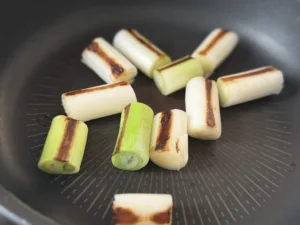
Peel the daikon, cut it in half lengthwise, then halve again to make quarters.
Slice into pieces about 3 cm thick.
Place the daikon in a pot with plentyof water and boil for 15 minutes to pre-cook. Drain and set aside.
Place the eggs in a pot and cover with water.
Boil over medium heat for 12 minutes, then transfer immediately to cold water.
Peel the shells once cooled.
-
Season and simmer
Once the pork is cool enough to handle, transfer it to a bowl of clean water.
Discard the cooking water, ginger, and leek greens used for parboiling.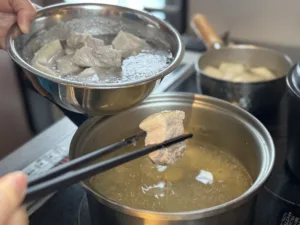
In a clean pot, combine the dashi, soy sauce, sugar, and sake. Mix well.
Remove the pork from the water and add it to the pot.
Bring to a boil over medium heat, then reduce to medium-low and simmer for 30 minutes.
Add the pre-boiled daikon and continue simmering for another 30 minutes.
Then add the boiled eggs and grilled leeks, turn off the heat, and let everything cool in the pot.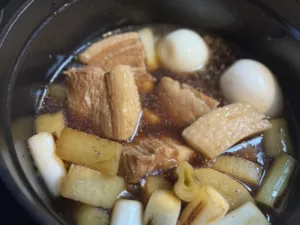
Letting the dish cool allows the flavors to soak deeply into all the ingredients.
-
Prepare the ginger garnish
Slice the ginger thinly across the grain, then stack the slices and cut into fine julienne.
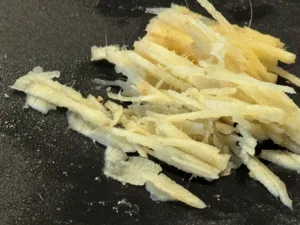
Soak the shredded ginger in cold water until ready to serve.